

Robotics is becoming global infrastructure.
From autonomous mobile robots to service platforms and increasingly intelligent machines, robotics is moving beyond controlled factory environments and into the operations that shape everyday business.
Robotics is moving from machines to operating systems.
The next phase of robotics will not be defined by one machine, one market or one form factor.
Hardware, AI, software, integration and local operating knowledge are increasingly converging into systems that can move, perceive and act inside real environments.
 01
SERVICE ROBOTICS
Robots are entering spaces built for people.
Healthcare, hospitality, senior living, campuses and commercial buildings all contain repetitive workflows that can increasingly be supported by autonomous systems.
 02
MOBILE ROBOTICS
Physical movement is becoming programmable.
Autonomous mobile robots are changing how goods, equipment and materials move through warehouses, factories and distribution networks.
 03
EMBODIED AI
Intelligence is becoming physical.
Advances in perception, reasoning and multimodal AI are beginning to change what autonomous systems can understand and how they operate in less predictable environments.
One technology. Different reasons to adopt it.
Manufacturing scale, hardware innovation and rapid commercial experimentation continue to drive robotics development.
Labour economics, staffing pressure and enterprise integration are opening new commercial use cases.
Industrial automation, safety, productivity and workforce constraints remain major drivers of adoption.
The future of robotics may be less about selling machines and more about building reliable systems around them.


Intelligence is moving into the operation.
The debate around artificial general intelligence keeps accelerating. Businesses do not have to wait for AGI to rethink how intelligence fits into their systems.
Today's opportunity is already significant: software that can reason, research, generate, retrieve and increasingly act across real workflows.
AGI is not the product. Intelligence is becoming infrastructure.
The commercial question is not simply whether machines eventually reach human-level general intelligence.
It is how increasingly capable AI systems can be connected to software, data, people and operations today.
AI as a tool.
Research, writing, coding, analysis, retrieval and assistance are already being integrated into everyday knowledge work.
AI as a system.
Models increasingly work with tools, enterprise data and specialized agents to execute larger parts of a workflow.
AI as infrastructure.
Intelligence may increasingly become an underlying layer connecting software, physical systems and business decisions.
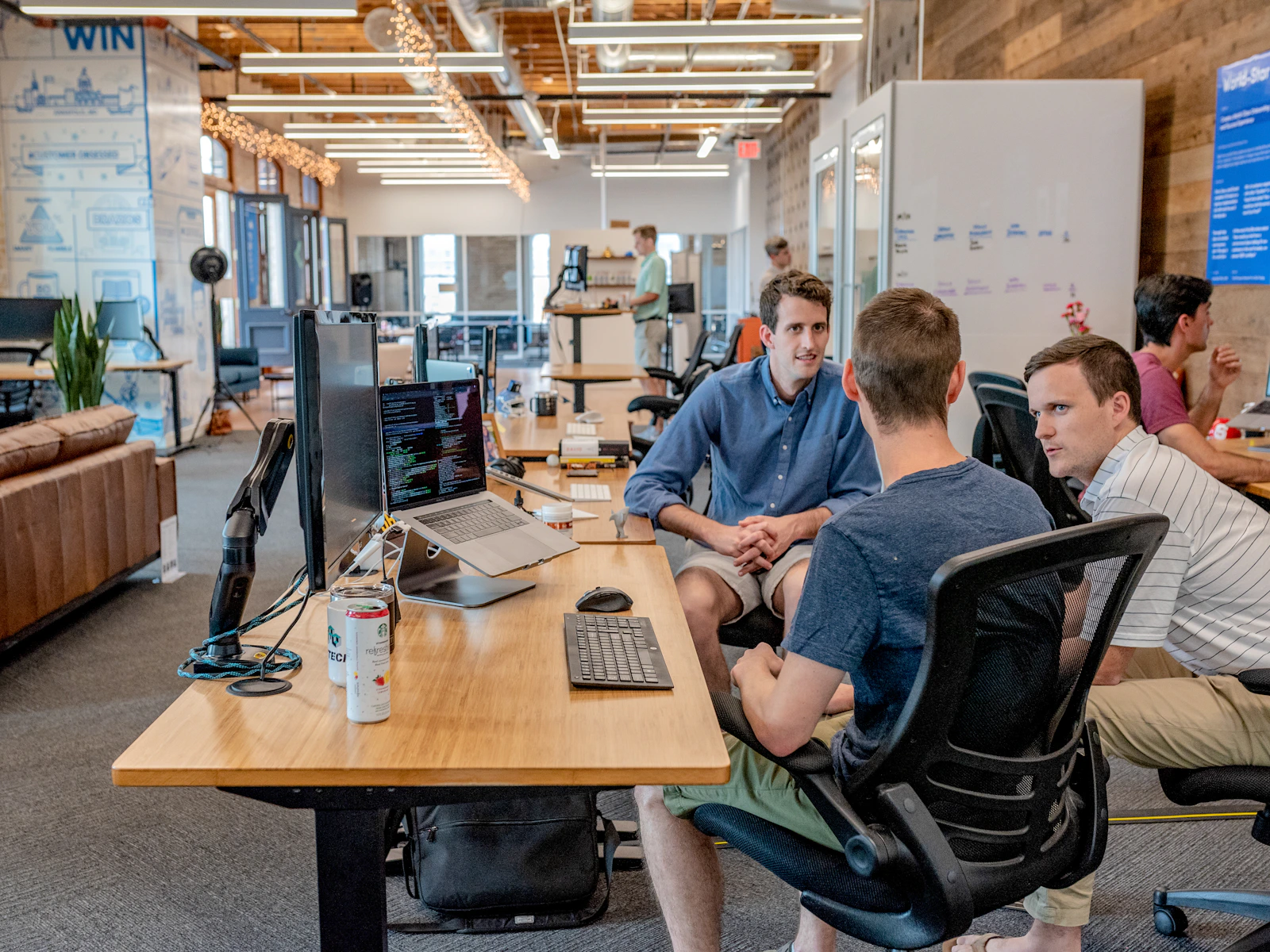
AI capability is moving faster than organizational change.
A technically powerful model can still create very little value if it does not fit the process, data, security model or people expected to use it.
Successful adoption is therefore as much an operating challenge as it is a technology challenge.
What if AGI arrives later than expected?
Businesses that learn how to use today's AI effectively still win.
What if it arrives earlier?
Businesses that already understand how to integrate intelligence into operations are better positioned again.
The useful question is not whether AI becomes human-like. It is where intelligence creates measurable value before that happens.


One model may not be enough.
Different AI models increasingly have different strengths, costs, capabilities and constraints.
The enterprise opportunity may therefore shift from choosing one model to building an intelligent layer that knows which model, data and tool should handle each task.
The value may move from the model to the system around it.
A single AI model does not need to perform every task, understand every dataset or make every decision.
Enterprise systems can increasingly route work between models, combine proprietary information with external intelligence and verify outputs before they reach the user.
From a prompt to an enterprise system.
The model becomes one component inside a larger architecture designed around the business.
Different intelligence for different work.
Reasoning, coding, language, multimodal and specialized models can each serve different parts of the workflow.
Decide what should handle the task.
An orchestration layer can select models based on capability, cost, sensitivity and required performance.
Connect intelligence to the business.
Enterprise documents, systems, customer information and approved knowledge give the model useful context.
Check before acting.
Sources, confidence, policy rules and even other models can help evaluate an output before it enters a workflow.
Turn intelligence into work.
The result can support a decision, update software, generate work or trigger another process.
The best model is only one part of the decision.
Performance
Can the system produce the quality of reasoning, language or output the workflow actually requires?
Cost
Expensive frontier intelligence may not be necessary for every request or every stage of a process.
Privacy
Sensitive company or customer information may require different routing and infrastructure from general queries.
Reliability
Enterprise use requires mechanisms for validation, governance and human accountability.
Enterprise AI still has to fit the people who use it.
A technically sophisticated architecture can still fail if the interface, workflow or decision process does not make sense to the people responsible for the outcome.
Adoption therefore requires product design, domain knowledge and organizational understanding alongside AI engineering.

Do you need your own model?
Often, no.
Do you need your own AI system?
Increasingly, perhaps.
The competitive advantage may not come from owning the largest model. It may come from building the best operating layer around intelligence.


Canada may not build every robot. It may become a major market for them.
Robotics adoption is ultimately driven by economics: where labour is expensive, repetitive work is common and organizations need greater operating capacity.
Canada presents a market where those pressures increasingly intersect with healthcare, logistics, hospitality, commercial facilities and other service-intensive operations.
The Canadian robotics opportunity starts with the work nobody wants to waste human time doing.
Moving supplies. Transporting materials. Delivering goods inside large buildings. Repeating predictable physical workflows.
These tasks are rarely the most visible part of an operation, but together they consume enormous amounts of time.
Technology adoption follows operating pressure.
The strongest commercial case begins where operating constraints are already measurable.
Human time is expensive.
Automation becomes more attractive when repetitive work consumes relatively costly labour.
Limited teams still need greater output.
Robotics can increase operating capacity without requiring every physical workflow to remain manual.
Large buildings create repetitive movement.
Hospitals, hotels, warehouses, campuses and care environments continuously move goods between people and locations.
Automation can protect human attention.
The goal is not simply fewer people. It is using people where judgement, care and interaction matter most.
Where robotics could fit.
 HEALTHCARE
Hospitals contain an enormous amount of internal logistics.
Supplies, equipment, linens and other materials move continuously through large facilities.
 LOGISTICS
Material movement is already highly measurable.
Warehouses remain natural environments for increasingly autonomous physical movement.
 HOSPITALITY
Automate behind the guest experience.
Deliveries and repetitive back-of-house movement can increasingly be supported without removing human-facing service.
 COMMERCIAL FACILITIES
Large buildings repeat the same physical workflows every day.
Offices, campuses and mixed-use facilities may present opportunities for autonomous delivery and facility support.
A robot should earn its place in the operation.
Find the workflow.
What repetitive physical task is actually consuming meaningful employee time?
Understand the economics.
What does the current workflow cost in time, labour and operating capacity?
Test it for real.
Can the technology operate reliably inside the customer's actual environment?
Expand after proof.
Integration, support and measurable ROI turn a pilot into an operating solution.
The technology may already exist. The market still has to be built.
Robotics platforms
Hardware innovation
Manufacturing
Customer development
Integration
Deployment
Asia has developed deep capabilities across robotics hardware, manufacturing and automation.
Bringing those technologies into Canada requires more than distribution. It requires local customer understanding, integration, commercial positioning and long-term support.
One workflow.
One environment.
One measurable pilot.
A successful deployment creates operational proof, customer confidence and a reference case that can support expansion into additional facilities and markets.
Canada does not need robotics everywhere. It needs robotics where the economics, workflow and human value clearly justify it.


Better robotics in care should create more human time.
In healthcare and senior living, the best use of robotics may not be replacing people. It may be reducing repetitive internal movement so nurses, caregivers and staff can spend more time on work that requires judgement, empathy and attention.


Care remains a human environment.

Resident experience still comes first.

Movement and logistics happen all day.
A care facility contains two very different kinds of work.
Some work is relational: observation, reassurance, communication and direct support. Other work is operational: meals, supplies, linens and equipment moving throughout the building.
Robotics becomes most compelling when it removes low-value movement without disrupting high-value human care.

The clearest early opportunities are usually repetitive internal logistics.
Moving prepared meals between kitchens, service zones and resident floors.
Regular transport of consumables, materials and stock across the facility.
High-frequency collection and redistribution throughout care environments.
Moving non-critical equipment between departments, floors and service areas.

Automation should support care — not replace the relationship.
Clinical and care decisions require context beyond task completion.
Comfort, trust and reassurance are not operational inefficiencies.
Residents, patients and families often need explanation and human understanding.
Technology can assist the workflow, but accountability still sits with people.
Do not ask: “How many people can the robot replace?”
The more useful question is how much meaningful time the system can return to nurses, caregivers and operations teams.

Start with one workflow, not a giant rollout.
Identify a repetitive task with clear routes, frequency and cost.
Understand the current time, labour and service baseline.
Test in the actual environment with staff involved from the beginning.
Look at reliability, time saved, staff response and resident experience.

The strongest healthcare robotics deployments should make the building more efficient while making care feel more human.


Before the deployment, there is the work nobody sees.
New markets are rarely built through one announcement, one meeting or one piece of technology.
They are built through research, conversations, introductions, working sessions and a long series of decisions that gradually turn possibility into something real.

Strategy often looks like a room, a table and a difficult question.

Local understanding comes before scale.
Market development is mostly learning before it is selling.
The objective is to understand whether the technology, economics and customer problem actually belong together.
Understand the operation.
What is actually difficult? What is expensive? What is taking time? What does the customer care about?
Turn technology into a business case.
Technical capability only matters when it can be explained through the customer's workflow and economics.
Relationships carry the opportunity.
Customers, suppliers and partners need confidence in the people around the technology.
Evidence comes before scale.
One successful pilot can matter more than dozens of ambitious presentations.


Technology can cross borders quickly. Market knowledge cannot.
A platform developed for one market may have strong potential somewhere else.
But customer expectations, procurement, pricing, implementation requirements and operating economics can change completely.
Building across regions therefore means translating more than language. It means translating the business.
From conversation to deployment.
Find the problem.
Start with the customer's operation, not the product catalogue.
Test the fit.
Determine whether the technology, economics and environment make sense together.
Bring the right people together.
Customers, technical teams and commercial partners need aligned expectations.
Create evidence.
Test one measurable workflow in the real operating environment.
Expand what works.
A proven deployment becomes the foundation for the next customer, facility or market.
Not every important moment looks important.

The first useful conversation may simply reveal that the original idea was wrong.
Market development includes learning where technology does not fit — before time and capital are committed.

A commercial problem rarely belongs to only one team.
Sales, operations, technology and customer experience usually intersect before a deployment becomes viable.

Progress is often research, follow-up and another conversation.
The visible launch comes later. The operating model is usually built quietly beforehand.
Insights should not only explain where technology is going. They should show the work required to take it there.


